
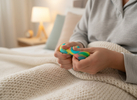
Bedtime Fidgets for Older Kids & Teens: Calm Nights for ADHD, Autism & Anxiety
, by Marrianne Parkes, 6 min reading time
, by Marrianne Parkes, 6 min reading time
Bedtime strugglesearn how fidgets can support calm nights for ADHD, autism and anxiety. Practical routine tips + Australia-wide fidgets.
Bedtime can get harder as kids grow.
Older kids and teens often have bigger days, heavier expectations, more social pressure, and (sometimes) more anxiety. Add ADHD, Autism, or sensory processing differences into the mix, and nights can turn into a loop of:
“I’m not tired.”
“My brain won’t stop.”
“Everything feels annoying.”
“I can’t get comfortable.”
If that sounds familiar, you’re not alone — and you’re not doing anything wrong.
A simple, sensory-friendly bedtime routine (with the right fidgets) can help your teen’s nervous system shift from alert mode to rest mode.
This guide shares practical, teen-appropriate ways to use fidgets at night — without making bedtime feel babyish.
A lot of “bedtime resistance” is actually regulation.
Common reasons nights feel intense:
ADHD brains don’t switch off easily (especially after a stimulating day)
Autistic sensory systems can stay “on” (sounds, clothing, temperature, light)
Anxiety ramps up in quiet moments (when there’s nothing else to focus on)
After-school restraint collapse (holding it together all day, then melting down at home)
Screen time and dopamine (not a judgement — just a real factor)
The goal isn’t perfect sleep overnight. The goal is to build a routine that helps the body learn: night = safe + predictable + calm.
Not all fidgets are good for sleep.
For bedtime, you want fidgets that are:
Quiet (no loud clicking)
Low stimulation (steady, predictable movement)
Comforting (soft pressure or smooth texture)
Easy to put down (so they don’t become a “must-have” to fall asleep)
Teen-appropriate (discreet and not childish)
If you’re building a small bedtime kit, start with one calming option and one discreet option from our Fidgets collection.
A lot of teens explain it like this:
“My brain is loud.”
“I can’t stop thinking.”
“I feel restless.”
A bedtime fidget gives the body a small, controlled input — which can reduce the urge to seek stimulation in bigger ways (scrolling, pacing, arguing, snacking).
Think of it as a bridge: from busy day → calm night.
Here’s a teen-friendly routine you can adapt.
Keep the tools visible and easy to reach:
1–2 fidgets
a drink bottle or water
a book or journal (optional)
a soft lamp or night light
This reduces the “getting up 10 times” cycle.
Try a short, consistent window instead of a long routine that feels like a punishment.
Example:
Lights dim
Fidget in hands
10 slow breaths (or a short calming audio)
Into bed
Instead of “use your fidget,” try:
“Let’s give your hands something steady so your brain can slow down.”
“Pick one fidget for calm — not for speed.”
That tiny shift helps teens understand it’s a tool, not a toy.
Fidget rings are great for teens because they’re:
subtle
quiet
easy to use without looking
not obviously “a sensory toy”
They can help with:
bedtime anxiety
skin picking / nail biting
restless hands
Bedtime tip: Choose a smooth, steady ring motion. If it’s too “clicky,” it can keep the brain awake.
Pressure-based fidgets (like squishies) can be very regulating after a long day.
They’re helpful for:
emotional overwhelm
after-school decompression
calming the body before sleep
Bedtime tip: Use squishies for 5–10 minutes, then place it back on the bedside table. The goal is calm, not staying up playing.
Some teens do best with fidgets that offer:
smooth rolling
gentle resistance
repetitive movement
These are often the best “sleep-friendly” options because they’re predictable.
loud clickers
anything that encourages fast spinning or competition
bright flashing lights
If your teen loves a spinner, it can still work — just set a simple rule: “slow spins only” and “below eye level.”
Teens can be sensitive to anything that feels like control.
Try:
Offer choice: “Want the ring or the squishy tonight?”
Keep it neutral: “Let’s trial this for 7 nights and see if it helps.”
Make it about comfort: “This is to make nights easier, not to change you.”
If your teen says no, you can still set up the calm zone and model it as an option.
If you want to keep it simple, start here:
1 discreet fidget (often a ring)
1 calming pressure fidget (often a squishy)
Then adjust based on what you notice.
Explore fidgets for older kids and teens: Fidgets collection
Used the right way, bedtime fidgets usually support sleep by helping the body regulate. Choose quiet, low-stimulation options and keep the routine short.
Aim for “use it to calm, then put it down.” Keeping fidgets on the bedside table (not in bed all night) can help.
No — many autistic teens and anxious teens find fidgets helpful because they support regulation and grounding.
That’s a sign it’s not the right bedtime match. Swap to a calmer option (smooth, quiet, predictable) and try again.
If nights are hard right now, start small:
pick one calm fidget
build a 10-minute wind-down
Repeat for a week
Small changes, done consistently, can make bedtime feel safer and easier — for your teen and for you.
Ready to build a teen-friendly bedtime kit? Browse our Fidgets collection and choose one discreet option + one calming option to trial this week.