
Classroom-Ready Quiet Fidgets for Focused Students
, by Marrianne Parkes, 8 min reading time
, by Marrianne Parkes, 8 min reading time
This guide explores quiet, classroom-ready fidgets that help students regulate without adding noise or visual clutter. Learn which tools suit goals like reducing restlessness, supporting waiting, building hand strength, and easing transitions. You will also find practical tips for class sets, storage tubs, cleaning routines, and planning your sensory toolkit around Australian school terms and exam conditions.
Finding a fidget that calms busy hands without disrupting the room can be tricky. In a classroom, library, or exam hall, noise and visual movement matter. The right tool supports attention and regulation while keeping lessons on track.
This guide lists quiet, teacher-approved fidgets you can slip in a pocket or pencil case. It also maps each tool to core goals like reducing restlessness, supporting waiting, improving hand strength, and smoothing transitions. You will also find practical tips for classroom sets, storage tubs, and term timing across Australia.
A classroom-ready fidget is:
Low noise and low visual movement
Small enough for one-hand use under the desk
Durable and easy to clean
Safe, with no loose parts for younger students
When in doubt, choose soft, silent textures, smooth mechanisms, and muted colours for minimal visual distraction.
Pocket-friendly picks for class, exams, and libraries:
Soft squish balls: Solid-yet-squeezy balls such as Smoosho or NeeDoh styles are quiet and satisfying. They offer steady resistance for hand strengthening and calming proprioceptive input. Choose smooth exteriors for less visual draw.
Smooth spinners: Look for balanced bearings and a matte finish. A compact spinner with a gentle spin is typically quiet and ideal for focus during note-taking. Avoid light-up or novelty noise versions.
Marble mesh and track fidgets: Slide a bead along stitched mesh or within a stitched track. Almost silent, great for waiting and turn-taking practice, and easy to hold under the desk.
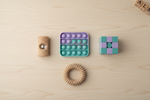
Small silicone pop items with dampened sound: Choose mini pop keyrings or dual-depth silicone pads with softer domes. Pressing action can settle nerves without the sharp pop of full-size boards. Keep colours subdued for exam use.
Discreet press-and-roll tools: Infinity cubes and gear balls with smooth, low-click actions support fine motor focus. Test the click level first, and pick the quietest mechanism for shared spaces.
Visual timers for the teacher’s desk: Liquid timers and mini sand art pieces are not student hand-fidgets, but they are powerful visual regulators. Place one on the teacher’s desk for transition cues or a class calm focal point.
Browse a wide range of quiet options in our collection of sensory fidget toys. Add to cart when you find your best fit:
See the full range of fidgets at Sensory Circle here:
Fidgets do not replace teaching or learning strategies. They add a manageable sensory input that helps many students self-regulate and stay on task. Common benefits include:
Reduce restlessness: Repetitive squeeze or smooth spin provides a steady input that lets the brain filter out distractions and tune into instruction.
Support waiting: Marble fidgets and soft pop minis help during roll call, lining up, and transition times when waiting is hard.
Improve hand strength and dexterity: Squish balls and resistance-based tools build endurance for handwriting and scissors.
Smooth transitions: A visual timer or agreed countdown plus a quiet fidget helps students shift from one task to the next with less stress.
Tip: Establish a class norm. A fidget helps you learn. If it becomes the focus, it rests in the tub.
Choose what you want to achieve:
Need calm, deep pressure: Soft squish balls or jelly-filled squeeze balls. Steady squeeze helps down-regulate.
Need subtle movement to focus: Balanced spinner or infinity cube. Smooth, near-silent actions suit reading or listening.
Need wait-time support: Marble mesh, small silicone pop keyring, or simple dimples with softer domes.
Need hand strength: Firm-resistance squeeze balls or grip trainers used in short sets during non-writing times.
Need transition cues: Teacher-managed visual timers or moving sand art at the front desk for a clear, calm signal.
Make fidgets easy to manage across a term:
Build a small class set: Start with 1 tub per table group, 5 to 8 items per tub, mixed styles. Label each item with the table colour or number.
Teach the routine: Model one-hand use under the desk, eyes on the teacher. Fidget stays at school. Swap only at break times.
Set quiet rules: No clicks, no trading mid-lesson, and put-away if off-task. Keep a simple visual reminder on the wall.
Storage that works: Clear, lidded tubs. Add a mesh pencil case inside each tub for exam-approved items if relevant to your school policy.
Cleaning plan: Quick wipe on Fridays. Rotate sets each term to maintain novelty without distraction.
If you are building for a full class or therapy room, multipacks are cost-effective and reduce decision fatigue for students. You can explore classroom-ready multipacks and bundles in our fidget toys collection at Sensory Circle here:
Plan your sensory toolkit around key points in the school year:
Term 1: Teach the routine early. Introduce tubs in Week 2. Keep choices simple while expectations settle.
Term 2: Add gentle variety, such as a second style per tub. Support mid-year assessments with quiet minis only.
Term 3: Reinforce rules after holidays. Add hand-strength options for students building writing stamina in cooler months.
Term 4: Keep to low-visual, low-noise choices during end-of-year exams and performances. Use teacher desk timers for calm transitions.
For exam conditions, confirm your school’s policy. Choose the most discreet tool, such as a small smooth squeeze or marble mesh, and store it in a clear pencil case.
When equipping a group, choose bundles that balance variety and silence:
Multipacks of soft squish or mini spinners: Good for table tubs and quick replacement.
Mini silicone pop stationery: Pencil case popper, notebook popper, and keyring pop offer familiar tools in school-friendly formats with a softer sound.
Mixed quiet kits: Combine squish balls, marble mesh, and one subtle spinner per tub. Add a teacher desk visual timer for transitions.
Looking for a ready-made mix? The Pop-It and Fidget Stationery Bundle offers school-friendly pop tools and accessories that fit pencil cases and classroom tubs. Explore it along with other classroom bundles in our fidgets range here:
Which fidgets are quiet enough for class? Soft squish balls, marble mesh, small silicone pop keyrings with dampened domes, balanced spinners without lights, and smooth infinity cubes. Keep colours muted for less visual draw.
How do fidgets support attention? They provide steady tactile or movement input that helps many students self-regulate. This can reduce restlessness, support waiting, and improve on-task behaviour during listening and writing.
What is the best way to manage a class set? Use labelled tubs per table, teach a clear routine, and restrict swaps to breaks. Set a simple rule: if it distracts, it rests. Clean weekly and rotate styles each term.
Which bundles suit classrooms and OTs? Multipacks of soft squish balls and mixed quiet kits are practical. The Pop-It and Fidget Stationery Bundle suits pencil cases. OTs often like sets that include resistance squeezes, marble mesh, and a calm visual timer for session transitions. See our classroom-suited fidget toy selection here:
Quiet fidgets can make lessons smoother by supporting regulation without adding noise or visual clutter. Choose soft squeezes, balanced spinners, marble mesh, and mini silicone pop tools with dampened sound. Use teacher desk visual timers to anchor transitions. Build labelled table tubs, teach firm routines, and plan stock around Australian term timing and assessments.
Ready to stock your classroom set or therapy kit? Explore our curated range of sensory fidget toys and bundles at Sensory Circle. Add to cart today and set your students up for calm, focused learning.