
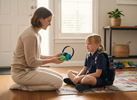
Sensory Tools for School Refusal (Gentle Supports for Mornings That Feel Impossible)
, by Marrianne Parkes, 13 min reading time
, by Marrianne Parkes, 13 min reading time
School refusal is often anxiety + overwhelm. Here are practical sensory tools and routines that can support kids who struggle to get to school, without escalating mornings.
If you’ve lived through school refusal, you know it’s not a simple “won’t”.
It’s a full-body “can’t”.
It can look like panic, tears, nausea, refusing to get dressed, hiding, freezing, or a child who becomes angry and explosive the moment school is mentioned.
And for many neurodivergent kids, school refusal is often a mix of anxiety, sensory overload, and nervous system burnout.
At Sensory Circle, we’re not here to offer a quick fix or a guilt trip. We’re here to offer gentle, practical supports that can make mornings feel a little safer — and help your child move from “impossible” to “maybe”.
School is a lot.
Even for kids who want to learn, school can include:
· Loud, unpredictable noise (bells, classrooms, playgrounds)
· Busy visual environments
· Social pressure and masking
· Transitions all day long
· Demand after demand after demand
· Sensory discomfort (uniforms, shoes, smells, heat)
When the nervous system is overloaded, the body protects itself by avoiding the threat.
So instead of asking “How do I make them go?”, a more helpful question is:
“What’s making school feel unsafe in their body?”
Sensory tools won’t solve every reason for school refusal.
But they can help by:
· Reducing sensory load (especially noise)
· Giving the body a grounding anchor during panic
· Supporting transitions (home → car → gate → classroom)
· Creating predictable routines that signal safety
Think of sensory tools as nervous system support, not a bribe.
Noise sensitivity is a huge driver of school refusal.
Helpful supports include:
· Kids earmuffs for the walk into school, assemblies, and playground noise
· Comfortable headphones for the commute
Even if your child doesn’t wear them all day, having them available can reduce anticipatory anxiety.
For many kids, anxiety spikes at the gate.
A small, quiet fidget can:
· give their hands a safe job
· reduce panic spirals
· help them stay grounded while they separate
If you’re building a school-friendly kit, our Fidgets collection has quiet, portable options that work well for pockets and pencil cases.
If your child chews sleeves, collars, pencils, or fingers when anxious, mornings can ramp that up.
A safe chew tool can help by giving the jaw the input it’s seeking, which can be regulating.
A lot of school refusal is “I don’t know what’s going to happen.”
Visual supports can help, like:
· A simple morning checklist (dress → breakfast → shoes → car)
· A visual timer for “how long until we leave?”
· A first/then cue (First car, then music)
Predictability lowers threat.
Some kids regulate with pressure.
Options might include:
· A firm hug (with consent)
· A snug hoodie
· A weighted lap item in the car (used safely)
· A body pillow squish before leaving
If your child hates pressure, skip it — forcing it can backfire.
Here’s a simple structure that can reduce escalation.
When anxiety is high, lots of talking can feel like a demand.
Try short scripts like:
· “I’m here.”
· “We’ll go step by step.”
· “Hands tool.”
· “Ears tool.”
Before you push for action, offer a 30–60 second reset:
· fidget in hands
· three slow breaths
· headphones on
Then move to the next step.
Use the same sequence every day (even on hard days):
1. Shoes on
2. Hand tool
3. Ears tool
4. Car
Consistency builds safety.
If your child is refusing school, they’re likely running on empty.
After school, aim for:
· snack + water
· low demands
· quiet time
· calming sensory input
A child who is constantly depleted will struggle more the next morning.
· Threats and consequences in the peak panic moment
· Long lectures and “you have to” speeches
· Surprise changes to the morning routine
· Introducing brand-new tools mid-meltdown
School refusal is not solved by force. It’s solved by safety, support, and collaboration.
If your child is refusing school, it doesn’t mean you’re failing.
It means something about school (or the lead-up to school) is overwhelming their nervous system.
Start small. Pick one part of the morning that’s hardest (getting dressed, leaving the house, walking in the gate) and add one support: predictability + a regulating tool.
If you’d like to build a school-friendly kit, start with a couple of quiet options from our Fidgets collection and pair them with noise reduction and a predictable routine.
Gentle support doesn’t fix everything — but it can make the next step possible.