
Travel-Friendly Sensory Tools for Car Rides, Shops and Appointments
, by Marrianne Parkes, 12 min reading time
, by Marrianne Parkes, 12 min reading time
Need calm on the go? Here are travel-friendly sensory tools for car rides, shopping trips and appointments, plus tips for building an easy portable kit.
If leaving the house feels like a full-body sport, you’re not alone.
Car rides, shopping centres, medical appointments, school pick-ups, waiting rooms… they can all be a lot for sensory-sensitive kids (and honestly, for parents too). The good news is you don’t need a huge bag of stuff to make outings easier. A few travel-friendly sensory tools can go a long way.
At Sensory Circle, we’re big on practical supports that fit real life. Below are simple, portable sensory tools and strategies you can use to help your child stay calmer on the go—without turning every outing into a battle.
When you’re out and about, kids often face a sensory “stack”:
· Noise: traffic, shopping centre music, crowds, announcements
· Visual input: bright lights, movement, busy shelves
· Transitions: getting in/out of the car, changing plans, waiting
· Uncertainty: not knowing how long things will take
· Body needs: hunger, thirst, fatigue, needing movement
Even kids who cope well at home can struggle when their nervous system is overloaded in public.
The best on-the-go tools are:
· Small and easy to carry (pocket, pencil case, small pouch)
· Quick to use (no setup, no mess)
· Low noise (especially for waiting rooms)
· Durable (survives bags, car floors and being dropped)
· Comforting (your child actually wants to use it)
Here are a few categories that work well for everyday outings.
A small, quiet fidget can give kids something to do with their hands during:
· Car rides
· Waiting rooms
· Queues at the shops
· Sitting in a café
Look for options that are quiet and one-handed, so they don’t become a distraction for everyone else.
You can browse our Fidgets collection to build a simple “grab and go” set for the car and your bag.
Some kids regulate best through familiarity. A small comfort item can help them feel safe when they’re out of their usual routine.
Ideas include:
· A small plush
· A favourite soft fabric or sensory scarf
· A familiar keyring or “pocket buddy”
The goal is not to “baby” them—it’s to give their nervous system something predictable.
Noise is a big trigger for many kids. Having a plan for sound can be a game-changer.
Options might include:
· Kids earmuffs for shopping centres and events
· Headphones for car rides or appointments
· A quiet playlist or audiobook (for some kids)
Even if your child doesn’t need them every time, just knowing they’re available can reduce anxiety.
Some children settle with visual input, especially when they’re stuck waiting.
Travel-friendly options can include:
· A small sensory light (used safely and appropriately)
· A simple visual timer app
· A calm-down card with pictures (breathe, squeeze, sip water, headphones)
If your child chews when they’re anxious or concentrating, an oral sensory tool can help reduce chewing on sleeves, hair or random objects.
For outings, look for something:
· Easy to clean
· Easy to store
· Safe and designed for chewing
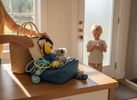
You don’t need a massive kit. Most families do best with a small pouch that lives in one place (your bag, the car, or the pram).
A simple kit might include:
· 1–2 quiet pocket fidgets
· 1 comfort item
· Earmuffs or headphones (if noise is a trigger)
· A drink bottle and a small snack
· A spare chew tool (if relevant)
If your child is older, involve them in choosing what goes in the kit. Ownership often increases use.
Tools work best when they’re used early—when you notice the first signs of stress (tight body, irritability, rushing, covering ears), not after things have already escalated.
Instead of “Here, use this,” try:
· “Hold your fidget while we wait.”
· “Headphones on for the loud part.”
· “Squeeze while we walk in.”
A clear job makes it more likely your child will use the tool.
Some outings are just hard. A sensory kit won’t make every trip perfect, but it can reduce the intensity and help your child recover faster.
If you can, build in a small recovery moment:
· A quick car break
· A quiet corner
· A short walk outside
· A snack and water
Sometimes the best sensory tool is a pause.
Outings don’t have to feel like survival mode.
With a few travel-friendly sensory tools—and a simple plan for noise, waiting and transitions—many families find public moments become more manageable.
If you’d like to build a portable kit for car rides, shops and appointments, start with a couple of calm, quiet options from our Fidgets collection and keep them somewhere easy to grab.
Small tools, used early, can make a big difference.